Gut Health Foods: A Simple Daily Plate You Can Keep
By:Author:Liver Detox Editorial
Updated on:October 18, 2026
- What a Day of Gut-Friendly Eating Looks Like
- How Many Gut Health Foods You Need Each Day
- Why Everyday Swaps Beat a Strict Gut Reset
- Fitting Gut Health Foods Into a Packed Week
- Adjusting Gut Health Eating to Your Situation
- When People Usually Give Up on Gut Changes
- Letting Liver Detox Simplify Your Gut Health Plate
- Building a Plate You'll Actually Keep Eating
Gut health foods are simply foods that feed the bacteria living in your digestive tract - things like fibre-rich vegetables, fermented foods, whole grains and legumes. Eat a mix of them most days and your gut gets a steadier supply of what it needs to function well.
The mechanism is straightforward. Fibre and plant compounds pass through to the lower gut where bacteria break them down, and fermented foods add live cultures to the mix - variety matters more than any single ingredient.
This article covers what a realistic day of eating looks like, how much to aim for, why small swaps beat a strict overhaul, and how to fit it around a normal week.
What a Day of Gut-Friendly Eating Looks Like
There's no single correct menu here, but a day built around a few gut health foods at each meal is easy to copy and easy to repeat.
A Sample Day
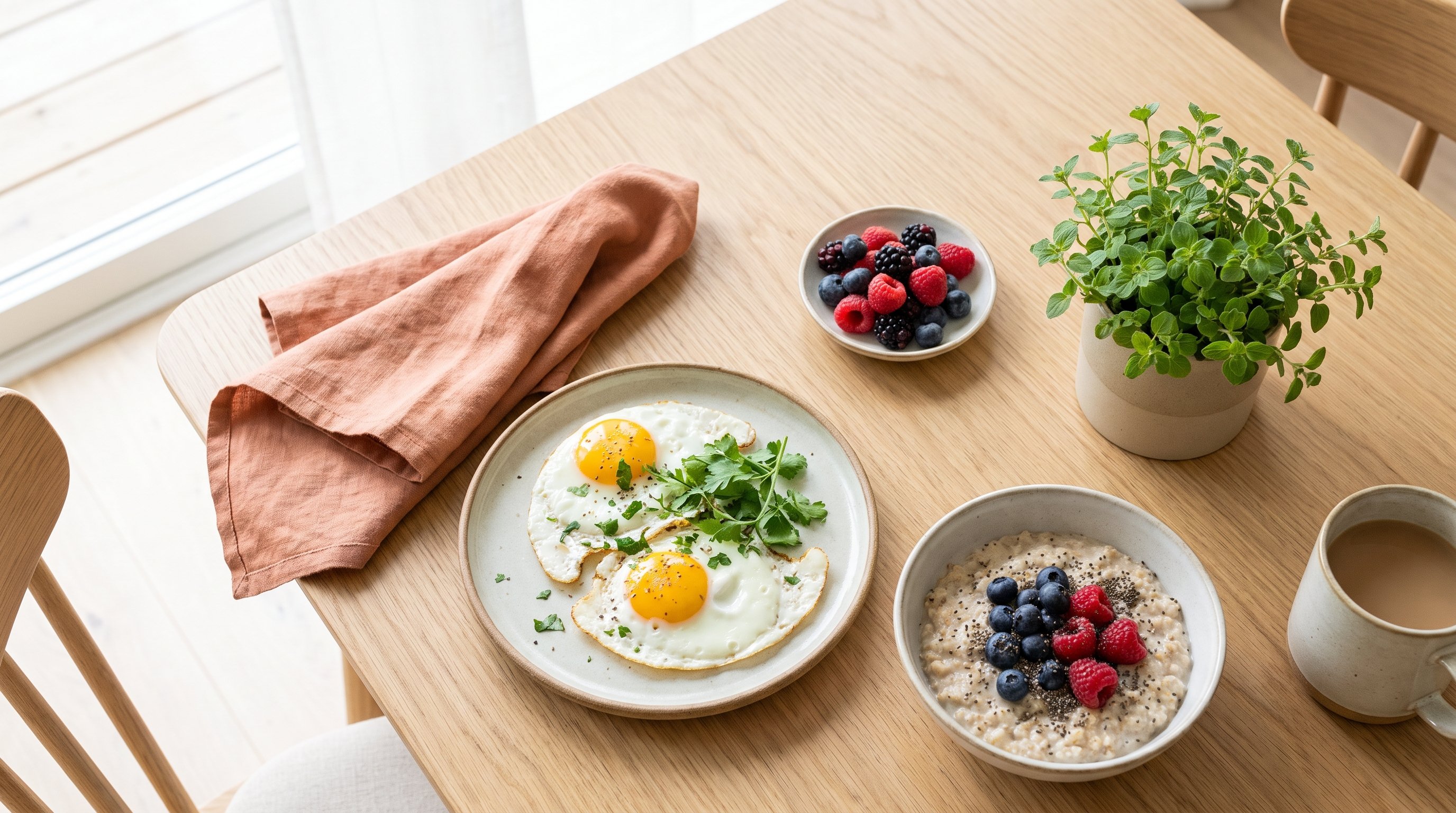
- Breakfast - porridge oats with berries and a spoon of natural yoghurt
- Lunch - mixed bean salad with leafy greens, olive oil and a wholegrain roll
- Snack - a small pot of kefir or a piece of fruit with a few nuts
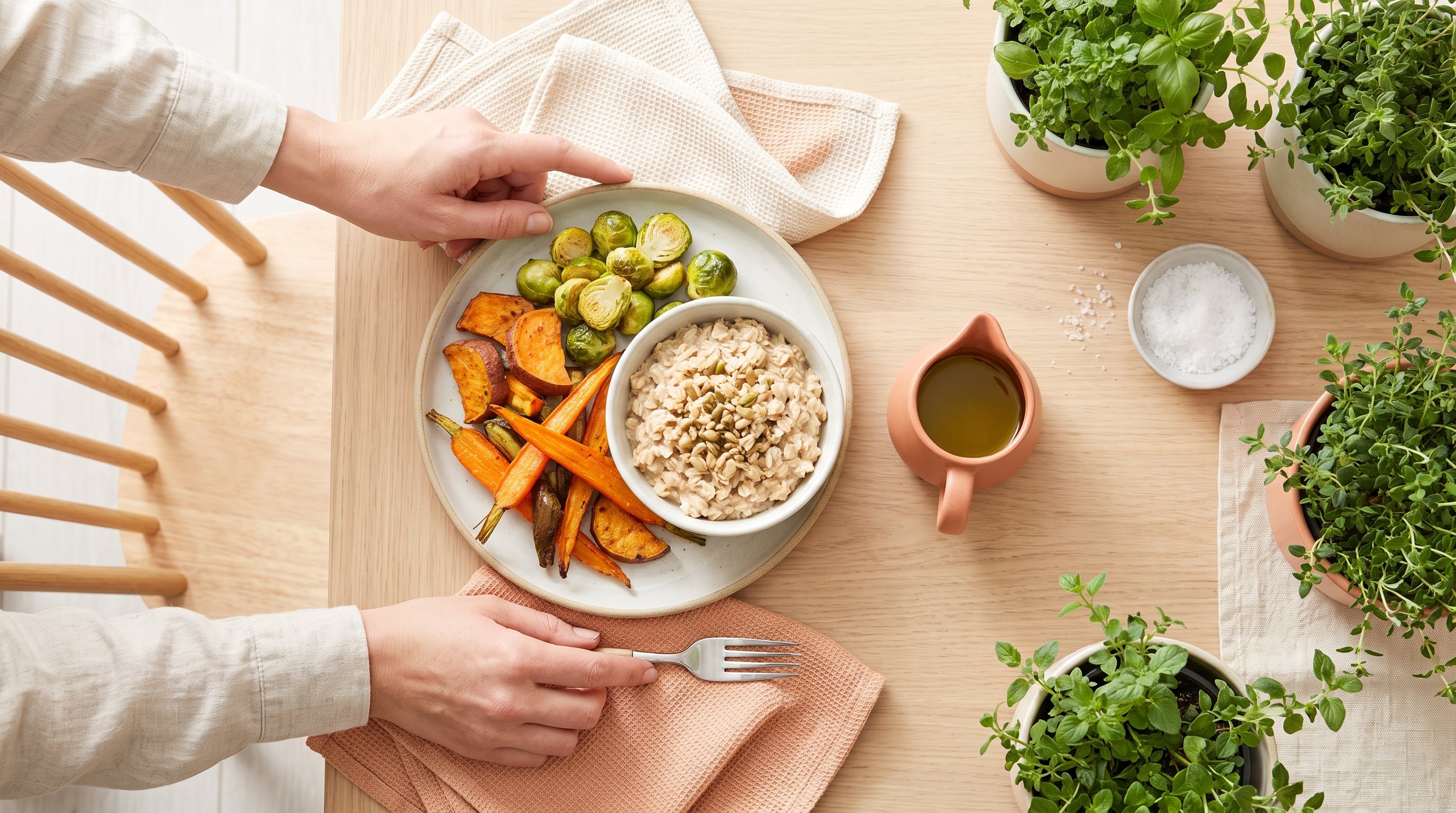
- Dinner - lentil and vegetable stew with a side of sauerkraut or kimchi
- Evening - herbal tea and a square or two of dark chocolate if you fancy it
Nothing here is unusual or expensive, and that's the point - it's food most people already buy, just arranged with the gut in mind.
How Many Gut Health Foods You Need Each Day
Aiming for Variety Over Volume
Rather than chasing one big number, aim to get a handful of different plant foods and at least one fermented food into your day.
| Food Group | Rough Daily Amount |
|---|---|
| Vegetables and fruit | 4-5 portions daily |
| Wholegrains | 2-3 servings daily |
| Legumes | 1 serving most days |
| Fermented foods | 1 small serving daily |
| Nuts and seeds | A small handful daily |
Think of these as a loose guide, not a checklist to tick off perfectly - hitting most of them most days is plenty.
Why Everyday Swaps Beat a Strict Gut Reset
A strict gut reset - cutting out whole food groups and living on supplements for a few weeks - sounds dramatic, but it's hard to sustain and the habits often vanish the moment normal life resumes.
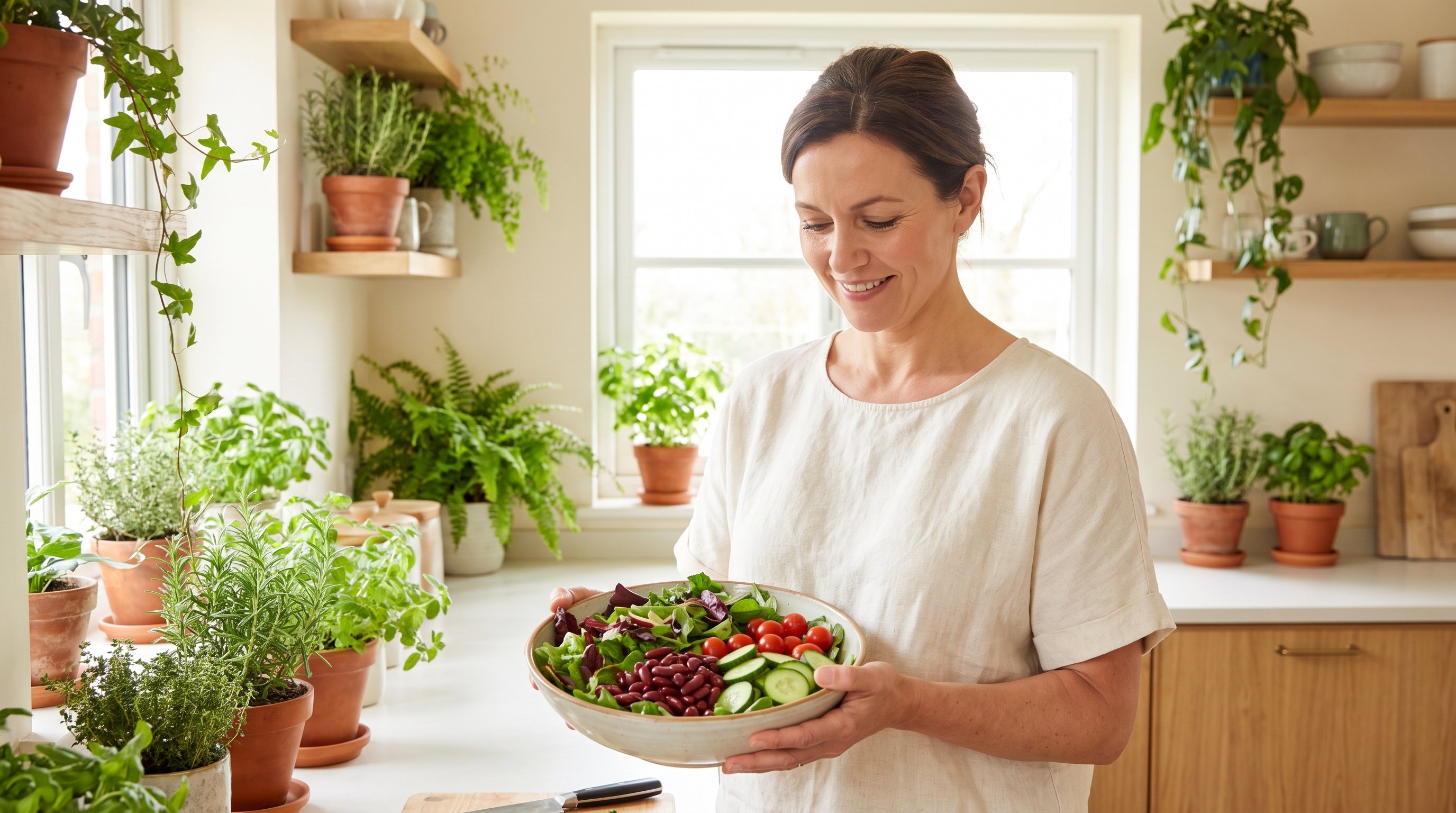
Swapping white bread for wholegrain, adding a spoon of yoghurt to breakfast, or tossing beans into a salad you already make is a much smaller ask.
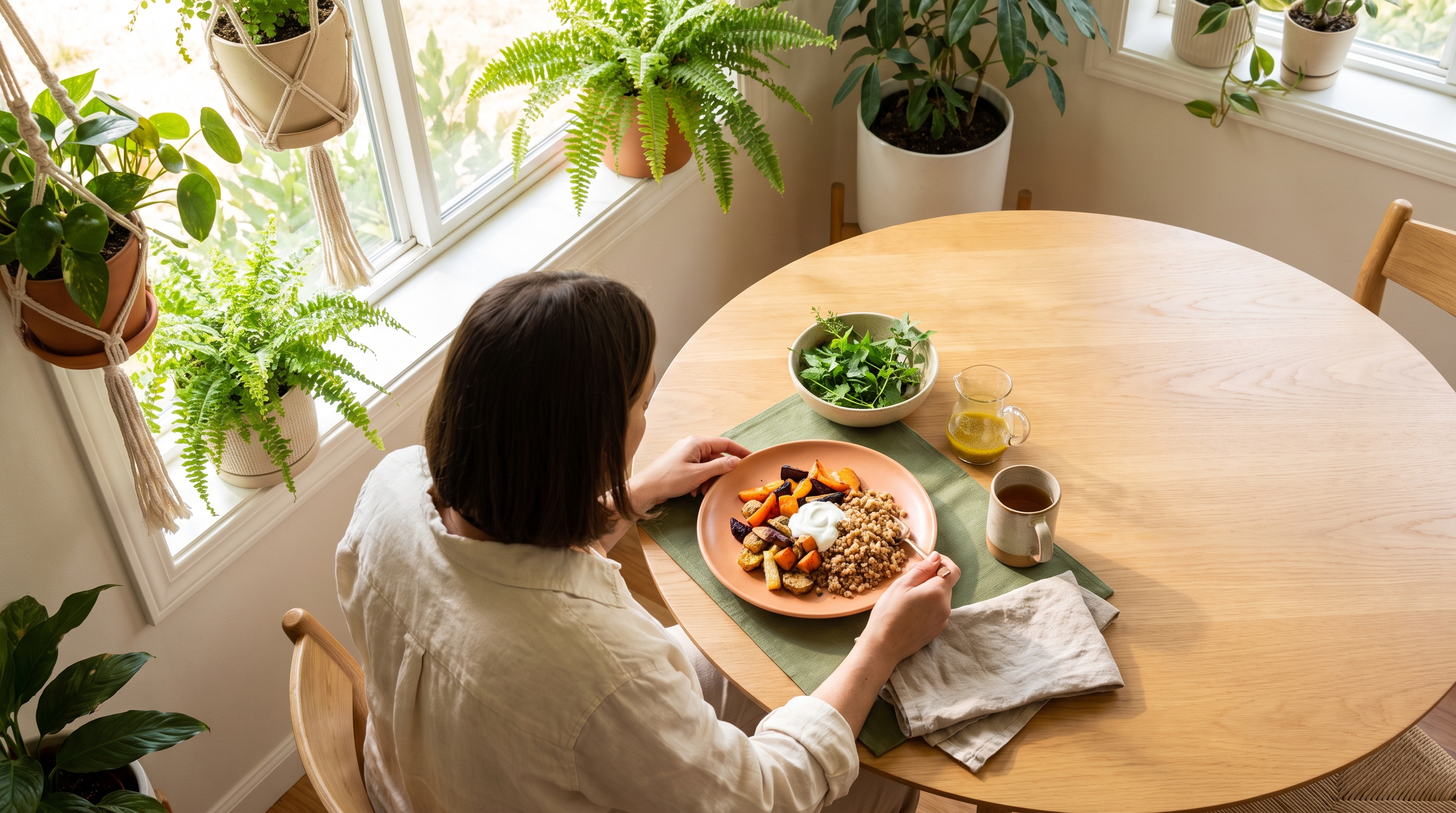
Small swaps you barely notice tend to stay in your routine for months, while a strict reset tends to get abandoned within weeks - and a habit you keep beats a plan you quit.
Fitting Gut Health Foods Into a Packed Week
Busy weeks are exactly when gut-friendly eating slips, because quick meals tend to skip fibre and lean on convenience food instead.
Batch-cooking a pot of lentil stew or bean chilli on a quieter evening means there's something ready to reheat when time is tight, and keeping a jar of sauerkraut or kimchi in the fridge turns any plate into a gut-friendly one in seconds.
This is where a tool can help rather than add pressure - a meal plan built around food you already like, paired with simple trackers for water and habits, makes it easier to see where gut-friendly choices already fit into Liver Detox without extra thinking.
Adjusting Gut Health Eating to Your Situation
If You're Just Starting Out
Pick one meal a day to add a gut health food to, rather than redoing every meal at once - breakfast is usually the easiest place to start.
If Your Schedule Is Packed
Lean on foods that need no prep, like a tub of yoghurt, a bag of pre-washed leafy greens, or tinned beans rinsed straight into a salad.

If You're Older or New to Fibre
Increase fibre gradually and drink enough water alongside it, since a sudden jump in fibre can feel uncomfortable before the gut adjusts.
If You're Cooking for a Family
Add gut-friendly ingredients to dishes everyone already eats - extra vegetables in a bolognese, beans stirred into a curry - so nobody notices a big change.
When People Usually Give Up on Gut Changes
The drop-off point tends to come a few weeks in, when the initial novelty fades and the new habit hasn't quite become automatic yet.
Expect the first week or two to feel like extra effort, and don't expect to notice much of anything quickly - this is slow, quiet groundwork rather than something with a clear before-and-after.
Sticking with small, repeatable swaps through that flat middle stretch is usually what separates a habit that lasts from one that fizzles out.
Letting Liver Detox Simplify Your Gut Health Plate
Keeping track of fibre, fermented foods and water intake on top of a normal day can feel like one more job on an already full list.
Liver Detox pulls meal planning, light exercise, and simple trackers for water, weight and steps into one place, so gut-friendly swaps sit inside a plan you're already following instead of being something extra to remember.
Fix Your Liver
Eat Clean Every Day
Building a Plate You'll Actually Keep Eating
Gut health foods don't need a strict plan or a long list of rules - a bit of fibre, a fermented food most days, and some variety across the week is enough to work with.
Pick one swap from today's list and add it to tomorrow's meals, and let it become the first small brick in a habit you keep - Liver Detox can help you build the rest of the plate around it.
FAQ
Feeding the gut a steady mix of fibre and fermented foods supports how it functions day to day, though no single food works alone. Consistency across weeks matters more than any one meal.
Strict cleanses rarely outlast the week they're attempted, because they ask for too much change at once. A steady pattern of everyday foods is easier to keep going and that consistency is what counts.
Adding fibre gradually and drinking enough water alongside it usually smooths out the adjustment period. Going from very little fibre to a lot overnight is the usual cause of discomfort, not fibre itself.
Keep the swaps small enough that they don't feel like a chore, and build them around meals you already cook. Liver Detox can help hold the plan together with trackers and a meal plan, so the habit doesn't rely on memory alone.
Share this post