Best Foods For Energy: A Simple Eating Pattern That Lasts
By:Author:Liver Detox Editorial
Updated on:October 18, 2026
- Building a Day of Meals That Keep You Going
- How Often Energy-Supporting Foods Should Show Up
- Fitting Energy-Friendly Eating Into a Busy Week
- A Four-Day Starting Point for Steadier Energy
- When Steadier Energy Actually Starts to Show Up
- Mistakes That Quietly Undercut Daily Energy
- Letting Liver Detox Simplify Your Energy-Focused Eating
- Choosing Tomorrow's Breakfast As Your First Step
The best foods for energy are the ones that release glucose slowly and pair carbohydrate with protein or fat, so blood sugar doesn't spike then crash an hour later.
That steadiness comes down to digestion speed - fibre, protein and fat all slow the rate sugar enters your bloodstream, which is what keeps you feeling even instead of wired then flat.
This guide covers which foods to build meals around, how often to eat them, a simple starter plan, and the mistakes that quietly drain energy even when the food choices look fine on paper.
Building a Day of Meals That Keep You Going
Steady energy isn't about one superfood - it's about a repeatable pattern you can follow most days without thinking too hard.
A Simple Pattern to Follow
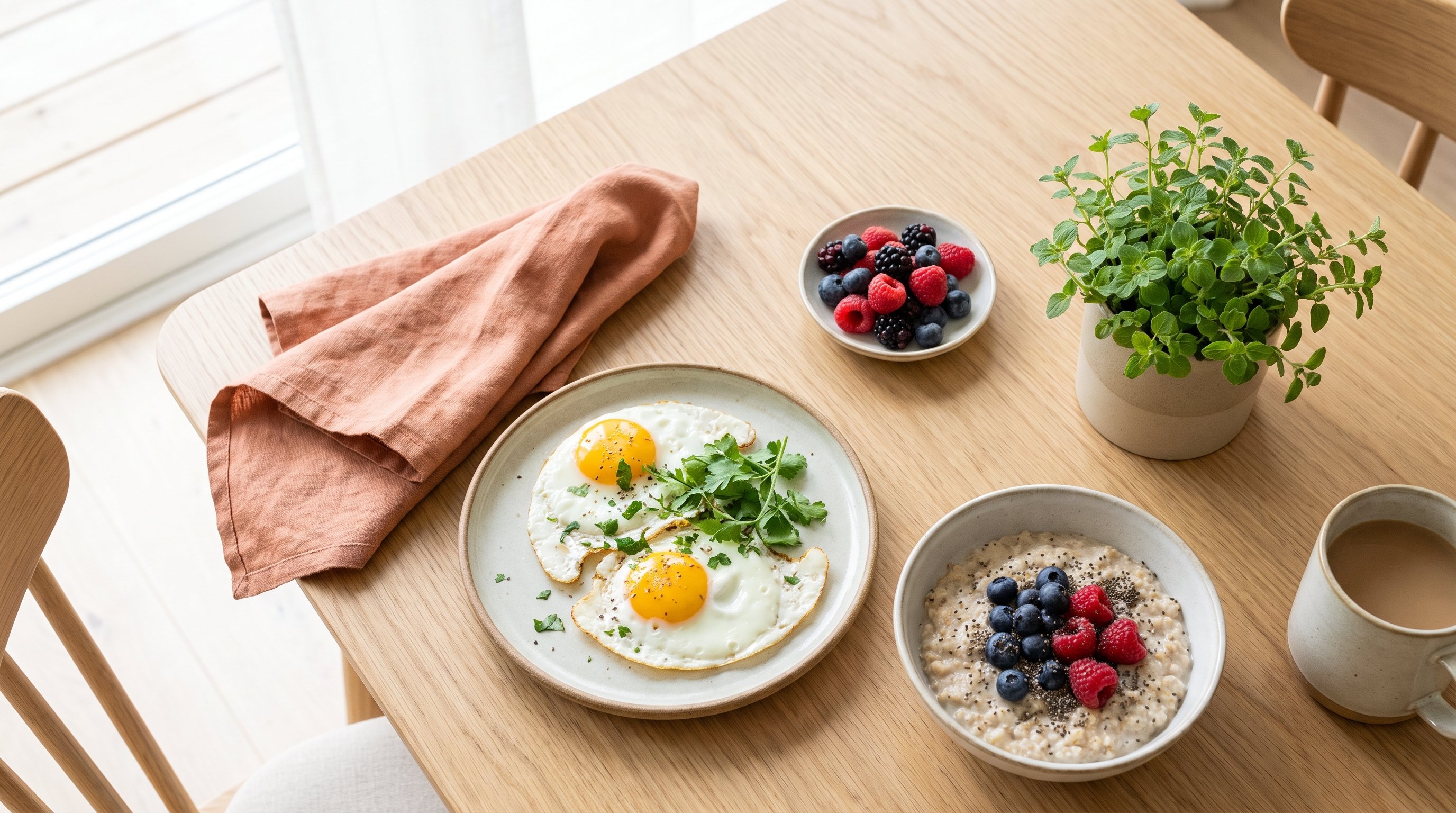
- Start with protein and fibre - eggs, oats, yoghurt or beans at breakfast slow down the morning sugar dip that leaves people reaching for a second coffee by 10am.
- Add a slow carb at each meal - oats, wholegrain bread, brown rice or lentils release glucose gradually instead of all at once.
- Pair fruit with fat or protein - an apple with nut butter or berries with yoghurt blunts the sugar spike fruit alone can cause.
- Keep a protein source at lunch - chicken, fish, tofu or eggs help you avoid the mid-afternoon slump that plain carbs alone tend to bring on.
- Space meals every 3-4 hours - long gaps between eating often show up as low energy before they show up as hunger.
- Drink water before reaching for caffeine - mild dehydration mimics fatigue, so water is sometimes the quicker fix.
- Keep a light snack on hand - a handful of nuts or a boiled egg stops a dip turning into a crash.
How Often Energy-Supporting Foods Should Show Up
Working It Into a Normal Day
Most people do well fitting these foods into three main meals plus one or two small snacks, rather than trying to eat constantly.
The table below gives a simple daily guide - it's a starting point, not a strict rule, so adjust portions to your own appetite.
| Food Type | How Often | Example |
|---|---|---|
| Protein source | Every meal | Eggs, chicken, beans |
| Slow carbohydrate | 2-3 times daily | Oats, brown rice |
| Healthy fat | 2-3 times daily | Nuts, olive oil |
| Fruit or vegetables | 3-5 times daily | Berries, leafy greens |
| Water | Throughout the day | Before and between meals |
Fitting Energy-Friendly Eating Into a Busy Week
The pattern above sounds simple until Tuesday arrives with back-to-back meetings and the only thing in reach is a vending machine.
Real life doesn't pause for meal planning, so the pattern needs to survive rushed mornings and takeaway dinners, not just a calm Sunday.

This is where having a meal plan built around food you already like matters more than any single ingredient - Liver Detox lays out customized meals and light exercise so the slow-carb-plus-protein pattern becomes the default, not an extra decision you have to make every single day.
Keeping water intake and meals logged in one place also makes it easier to notice when a flat afternoon traces back to a skipped lunch rather than anything mysterious.
A Four-Day Starting Point for Steadier Energy
Rather than overhauling everything at once, try shifting one meal at a time across four days.
| Day | Focus | Action |
|---|---|---|
| Day 1 | Fix breakfast first | Swap sugary cereal for eggs or oats |
| Day 2 | Add protein to lunch | Include chicken, fish, tofu or beans |
| Day 3 | Plan one snack | Keep nuts or fruit within reach |
| Day 4 | Watch the water | Drink a glass before each meal |
When Steadier Energy Actually Starts to Show Up
Nobody feels a dramatic shift on day one, and that's normal rather than a sign something isn't working.
The afternoon slump is often the first thing to ease, simply because breakfast and lunch are carrying more protein and fibre than before.
Give the pattern a few weeks before judging it - energy tends to even out gradually as meal timing and food choices settle into habit rather than effort.
Mistakes That Quietly Undercut Daily Energy
Skipping Breakfast to Save Time
Running on empty until midday often means overeating later and feeling worse by 3pm - a small protein-rich breakfast, even five minutes of eggs or yoghurt, tends to pay off more than the time saved.
Relying on Coffee Instead of Food
Caffeine can mask tiredness without addressing it, and a crash often follows once it wears off - pairing coffee with actual food rather than using it as a meal substitute works better.

Eating Carbs Without Protein or Fat
A plain bagel or bowl of cereal digests fast and leaves you hungry again within the hour - adding eggs, nuts or yoghurt slows that process down.
Forgetting Water Counts Too
Fatigue and mild dehydration feel almost identical, so it's easy to reach for a snack when a glass of water was the actual fix.
Waiting Too Long Between Meals
Long gaps between eating often show up as low energy before hunger even registers - spacing meals every few hours keeps blood sugar from swinging too far in either direction.
Letting Liver Detox Simplify Your Energy-Focused Eating
Building every meal around protein, slow carbs and fibre is simple in theory, but deciding what that looks like three times a day gets tiring fast.
Liver Detox takes that decision off your plate with a customized meal plan built around food you already like, paired with light exercises and trackers for water, steps and weight so you can see the pattern holding steady over time rather than guessing.
Fix Your Liver
Eat Clean Every Day
Choosing Tomorrow's Breakfast As Your First Step
Steadier energy doesn't need a full overhaul - it needs one meal that pairs protein with a slow carb, repeated most days until it stops feeling like effort.
Pick breakfast as the first swap, and let Liver Detox handle the rest of the planning while you build the habit around it.
FAQ
Foods that combine protein, fibre and a slow carbohydrate - think eggs with oats, or chicken with brown rice - tend to keep energy steadier than sugary snacks or plain carbs alone. Fat and protein slow digestion, which is what prevents the quick spike-and-crash pattern.
Energy can dip for a short stretch while your body adjusts away from quick sugar hits, which is normal rather than a sign it isn't working. Pairing any carb with protein or fat from the start usually softens that adjustment.
Simple swaps count more than perfect planning - keeping nuts, boiled eggs or yoghurt within reach covers most rushed moments. A customized meal plan through Liver Detox also removes a lot of the daily guesswork if planning from scratch feels like too much.
Energy depends on more than food alone - sleep, hydration and meal timing all play a part, so one piece being off can undo the rest. If gaps between meals are long or water intake is low, those are usually worth checking before assuming the food choices are the problem.
Share this post